
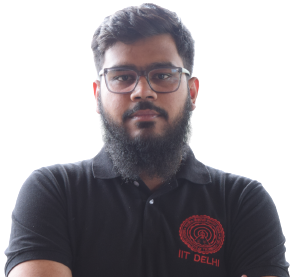
I am Asad Tariq, a Ph.D. candidate in Economics at the Indian Institute of Technology Delhi, with a research focus on political economy, development economics, and the economics of conflict. My doctoral work examines how electoral redistricting shapes public goods provision in India, and more broadly, how structural inequality and violence influence marginalized communities. For my Ph.D. I have been awarded the Junior Research Fellowship (2021-23) and Senior Research Fellowship (2023-26) by the University Grants Commission, India.
Currently, I am a Fulbright-Nehru Doctoral Research Fellow at Brown University. Prior to this, I was the Commonwealth Split-Site Scholar at Imperial College London. These affiliations have allowed me to engage with diverse academic environments while continuing to focus on research rooted in India’s development challenges. My current projects look at the long-term effects of religious violence, patterns of segregation – both physical and digital.
I have presented my work at international conferences, including the Canadian Economics Association, BASAS Conference at King’s College London, and the European Bank for Reconstruction and Development. My research also appears in public platforms such as Ideas for India.
Beyond academia, I have experience conducting fieldwork, designing surveys, and working with policy-focused institutions. I aim to bridge the gap between research and policy, using empirical evidence to support inclusive development and institutional accountability.
Current Research:
My research sits at the intersection of political economy, development economics, and the economics of conflict and discrimination, with a focus on how institutions shape the lives of marginalized communities in India. My doctoral work examines how electoral redistricting—through the process of delimitation—affects the provision of public goods at the village level. By using administrative and electoral data, I study whether changes to political boundaries alter the visibility and influence of minority groups.
Beyond my job market paper, I work on projects that investigate the long-term social and economic consequences of religious violence, particularly its gendered effects such as shifts in women’s age at marriage. I also explore how communities rebuild after conflict, looking at patterns of mobility, social cohesion, and access to state support.
Across these projects, I rely on big data: large-scale datasets and geographic information systems (GIS). My goal is to contribute empirically grounded research that informs inclusive policy and deepens our understanding of inequality.
Areas of Study:
Political Economy, Minority rights, India, Religion, Segregation