
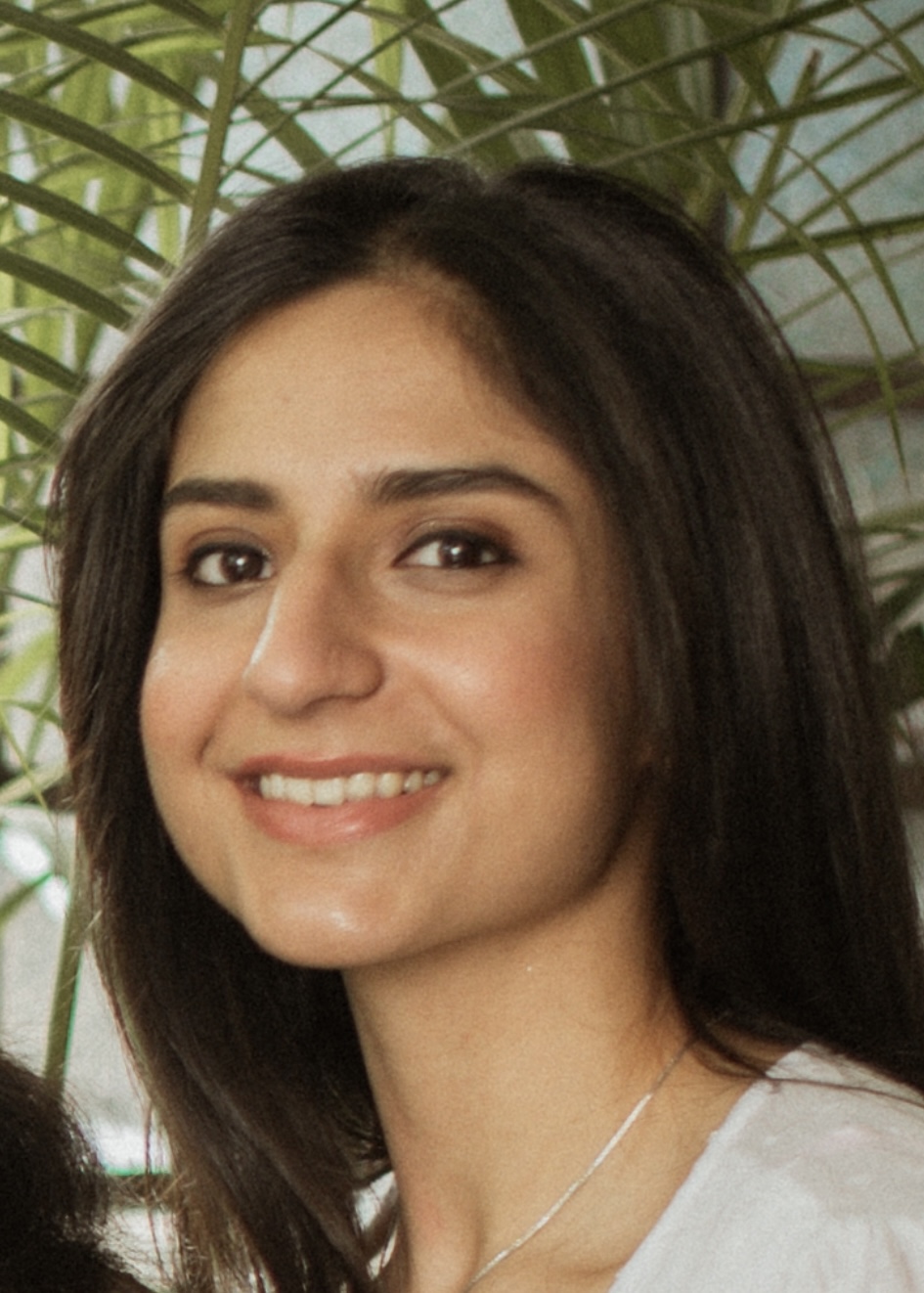
Ritika Arora-Kukreja is an Education Evaluation Manager and PhD Candidate in International Development at the London School of Economics, researching accountability, school choice, and communal politics in Indian education.
She holds an MPhil from the University of Cambridge and a BA from King’s College London, focusing on accountability, political anthropology, and education policy. Ritika has authored publications on these subjects, including her latest article, titled “Relocating the political in education” (https://doi.org/10.1080/21582041.2022.2147987), published in Contemporary Social Science – a journal of the Academy of Social Sciences (ACSS).
She also teaches in the Department of Government, and Department of Social Policy at the LSE. Previously, Ritika worked as a social impact consultant in India, advancing UNICEF’s initiatives that bridge youth disparities and enhance community development.
The guiding objective of her professional and academic work is to improve equality of opportunity for students from less advantaged, and underrepresented backgrounds.
Current Research:
In fragmented and politically charged societies, what do parents seek from schools, and to whom are education providers accountable? Global education reforms increasingly promote accountability measures and expanded parental choice as mechanisms for improving school quality, positioning these policies as a means of empowering communities and reducing state inefficiencies. India’s education system mirrors these global trends, yet in a country where politics permeates everyday life and influences 1.4 billion socially, religiously, and economically diverse citizens, can education ever remain separate from broader political discourses?
My research examines how quasi-market reforms in the Indian capital’s education system privilege certain voices whilst marginalising others, shaping schools in ways that reflect existing social hierarchies. Drawing on tools from political science and political anthropology, it interrogates how seemingly apolitical mechanisms – such as parental voice and choice – are deeply embedded in struggles over power, identity, and exclusion. Through interviews with 230 parents and school representatives across Delhi and an analysis of 192 school disclosure documents, my findings reveal how market-driven competition creates conditions of hyper-accountability, forcing schools to align with dominant group preferences rather than educational principles. Unexpectedly, the findings also reveal a form of religious nationalism that emerges from below – what this study terms ‘bottom-up Hindutva’ – rather than through state policy as existing scholarship suggests. This operates through parental demands for Hindu-first curricula, pressure to dismiss Muslim staff, and the careful crafting of socio-religious homogeneity in school communities.
With this, my research challenges the assumption that parental agency is a neutral or depoliticised force, arguing instead that it serves as a mechanism for entrenching socio-political divisions. By questioning what and whom we consider ‘political’ in education research, this study calls for a critical rethinking of policies that fail to recognise how quotidian schooling decisions reproduce broader systems of power and exclusion in deeply stratified societies.
Areas of Study:
Hyper-accountability, Bottom-up Hindutva, Parental agency, Educational stratification, Political accountability, India